Knowledge Corner
In industrial manufacturing, cleanliness is not merely a prerequisite, it is a critical determinant of quality, precision and operational reliability.
In our “Did you know” section, we share expert insights and analyses on the full spectrum of cleaning requirements across industries. Here, professionals will find practical guidance, solutions to recurring challenges and in-depth application references designed to help optimize processes, ensure compliance and uphold the highest standards of performance.
Whether you are seeking answers to common issues or exploring advanced techniques, this section serves as a reliable resource for maintaining excellence at every stage of production.

The Role of Temperature and Time in Industrial Cleaning
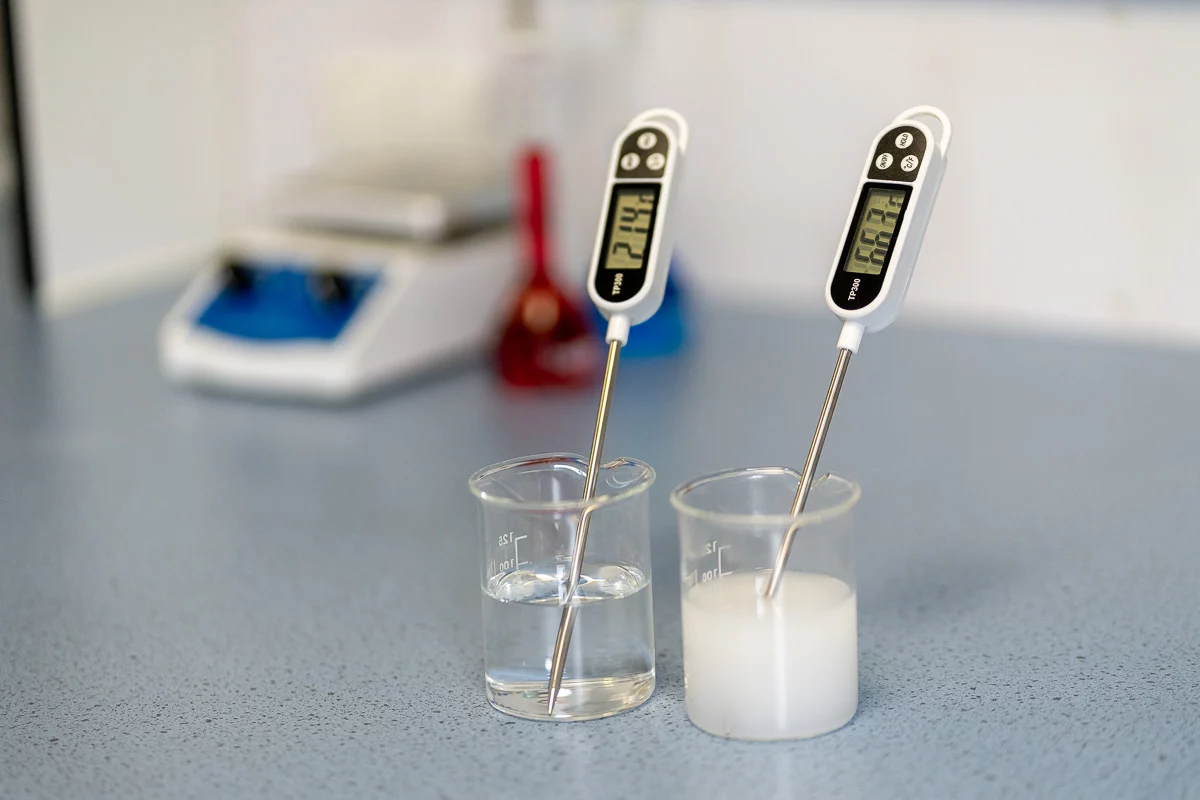
In industrial cleaning processes, temperature and exposure times are two fundamental parameters that significantly influence the final cleaning result. Both factors determine how effectively contaminants can be dissolved, detached and ultimately removed from component surfaces.
Temperature as a Key Parameter
Temperature directly affects the chemical and physical mechanisms involved in the cleaning process. As temperature increases, cleaning efficiency gernerally improves. Higher temperatures reduce the viscosity of cleaning agents, allowing them to penetrate contaminants more easily. At the same time, many contaminants become more soluble and chemical reactions proceed more rapidly.
This effect is particularly evident when removing oily or greasy residues, where elevated temperatures often lead to substantially improved cleaning performance. However, temperature must always be selected with careful consideration of the materials beeing cleaned. Excessively high temperatures may damage sensitive surfaces, coatings or sealing elements, potentionally compromising component integrity.
The Importance of Exposure Time
Exposure time defines how long the cleaning system is allowed to act on the contamination. Sufficient contact time enables cleaning agents and mechanical forces to fully loosen and detach stubborn residues. While longer exposure can support more thorough cleaning, it must remain economically viable within the production process. Excessively short cleaning cycles may result in incomplete removal of contaminants, whereas overly long treatment times can reduce process efficiency. In addition, certain materials may react adversely to prolonged exposure to heat, chemical or mechanical action, making careful time control essential.
The Interaction of Process Parameters
In practical applications, optimal cleaning results are achieved through balanced interaction of temperature, time, chemistry and mechanical action. This relationship is commonly described by the Sinners’s Circle, a widely recognized principle in industrial cleaning technology. By precisely adjusting these parameters, manufacturers can establish efficient, stable and reproducible cleaning processes that ensure a high level of component cleanliness. This is particularly critical in precision and ultra-precision cleaning, where even microscopic residues can influence product performance, reliability and overall quality.
The Sinner’s Circle – Foundation of Effective Cleaning
The Sinner’s Circle describes the four key factors that collectively determine the success of a cleaning process: chemistry, mechanical action, temperature and time. The interaction of these parameters allows cleaning procedures to be precisely adapted to the requirements of different materials, contamination types and industrial processes. By adjusting these four variables. Manufacturers can design cleaning systems that achieve reliable results while maintaining efficiency, material compatibility and process stability.
Overview of the Four Cleaning Factors
- Chemistry
Chemical agents form the foundation of most cleaning processes. Surfactants, solvents and aqueous cleaning solutions are responsible for dissolving, emulsifying or binding contaminants so they can be removed from the surface. The effectiveness of the cleaning chemistry depends largely on its formulation and compatibility with the specific type of contamination. Oils, greases, particles and thin films each require different chemical mechanisms to ensure reliable removal. Selecting the appropriate cleaning medium is therefore essential for achieving consistent and reproducible cleaning performance. - Mechanical Action
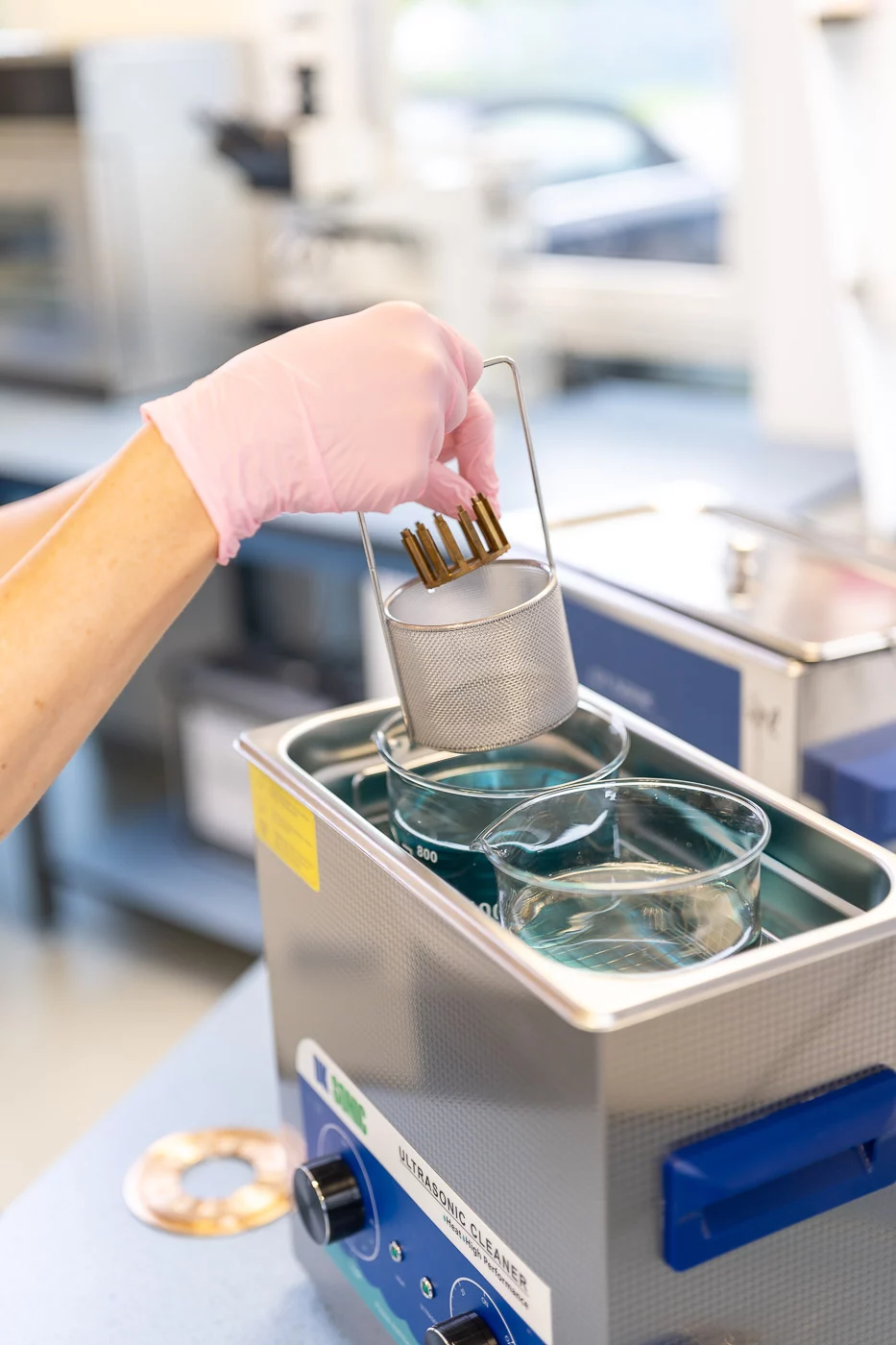
Mechanical forces support the cleaning process by physically detaching contaminants from surfaces. These forces may be generated through methods such as spray cleaning, brush cleaning, ultrasonic treatment or fluid flow. In high precision cleaning applications, mechanical energy plays a particularly important role. Even microscopic particles can adhere strongly to surfaces and targeted mechanical action helps ensure that these residues are effectively loosened and transported away from the component. - Temperature
Temperature significantly influences both, the chemical and physical dynamics of cleaning processes. Elevated temperatures typically accelerate chemical reactions, reduce the viscosity of liquids and enhance the dissolving capability of cleaning agents. However, the selection of an appropriate temperature must always consider material compatibility, component design and energy efficiency. Sensitve materials, coatings or sealing elements may require carfully controlled temperature levels to prevent damage while still achieving the desired cleaning performance. - Time
Time determines how long the cleaning medium and process parameters can act on the contamination. In general, longer exposure times allow contaminants to be dissolved more thoroughly. At the same time, cleaning duration must remain compatible with production efficiency. Excessively long cycles can reduce throughput and increase operation costs. Consequently, process engineers aim to determine an optimal cleaning time that balances effectiveness with economic considerations.
Interaction of the Four Factors
A central principle of the Sinner’s Circle is the interdependence of its four parameters. If one factor is reduced, at least one of the others must typically be increased in order to maintain the same level of cleaning performance. For example, a reduction in temperature may be compensated for by longer cleaning times or increase of mechanical action. This interrelationship makes cleaning processes highly adaptable and allows engineers to optimize them for specific economic constraints.
Importance for Industrial Cleaning
In modern industrial environments, particularly in precision and ultra precision cleaning applications, such as those used for electronic components, medical devices or high performance mechanical parts – the Sinner’s Circle provides an essential framework for process design and optimization.
By sytematically balancing chemistry, mechanical energy, temperature and time, manufacturers can establish cleaning processes that are efficient, reproducible and gentle on materials, while achieving the high levels of cleanliness required for demanding technical applications.
Conclusion
The Sinner’s Circle offers a clear and practical model for the planning, evaluation and optimization of cleaning processes. Through the deliberate adjustment of chemistry, mechanical action, temperature and time, industrial cleaning systems can be designed to operate efficiently without compromising cleaning quality.
When applied correctly, this principle enables stable processes, reliable component cleanliness and consistent product quality, even in applications where microscopic contaminants can have a decisive impact on performance and reliability.
It's Just Dish Soap - Why Industrial Cleaning Is More Complex
A common assumption we encounter quite often is, that cleaning is simple: “just add a little detergent and everything will become clean”.
According to this view, all cleaning agents are essentially the same – “just dish soap” In practice, however, industrial cleaning is far more complex. Our product portfolio alone consists of more than 150 different cleaning formulations, many of which differ significantly in their composition, function and field of application.
Decades of Development and Industry Specific Solutions
Over the past three decades, our cleaning solutions have been developed in close collaboration with customers of a wide range of industries. Each sector presents its own technical requiremants and challenges. For example, optical components demand extremly gentle cleaning processes to protect sensitive surfaces and coatings, whereas metal cleaning often requires more robust formulations capable of removing oils, greases, machining residue or particles.
When developing cleaning agents we consider numerous influencing factors, including:
- Material sensitivity and compatibility
- Cleaning technologies used in the process (ultrasonic cleaning, spray cleaning, high pressure cleaning, brush cleanig)
- Applicable temperature ranges
- Types of contamination to be removed
- User safety and environmental compatibility
- Regulatory or application specific requirements for ingredients (e.G. HIO free formultaions for EUV compatibility)
By integrating these aspects into the development process, we ensure that each cleaning agent is tailored to a specific technical environment.
Cleaning Strenght: From Gentle to Powerful
Our goal is always to make cleaning tasks as efficient and straightforward as possible for our customers. At the same time, the required cleaning performance remains the primary prority.
A useful analogy can be found in everyday household cleaning. At home you might use a soft toothbrush to clean delicate jewelry, while a wire brush may be needed to remove stubborn residues from a burnt pot. Both tools serve a purpose, but they are designed for very differnt tasks.
In industrial cleaning, we can adjust the “cleaning strenght” chemically in a similar way. Cleaning agents ca be formulated to act with varying degrees of intensity, ranging from extremly gentle solutions for sensitive materials to powerful formulations capable of removing persistent industrial residues.
One could say that our formulations cover the entire spectrum “from a soft spring to a bristling wire brush”
Choosing the Right Product Matters
Our objective is always to identify the most suitable product for each individual application. If a component can already be cleaned effectively with a mild formulation, comparable to a chemical “toothbrush”, there is no need to apply stronger chemistry.
This approach offers several advantages:
- Reduced chemial consumption
- Improved sustainability and resource efficiency
- Greater protection for users and environment
- Optimal material compatibility
Selecting the appropriate cleaning solution therefore plays a crucial role in both technical performance and responsible resource management.
The Importance of Professional Advice
For this reason expert consultation is an essential part of industrial cleaning. We support our customers in identifying the optimal cleaning solution for their specific application.
This support includes:
- Cleaning trials conducted in our laboratory
- Comprehensive process evaluation
- Technical guidance for implementation
- On-site consultation when required
Our specialists combine extensive practical experience with in-depht technical expertise, ensuring that every customer receives reliable support in achieving the desired level of cleanliness.
Ultimately, effective industrial cleaning is not about simply adding detergent – it is about selecting the right chemistry, tailored to the task, the material and the process environment.

Guideline for pH Adjustment - Neutralization
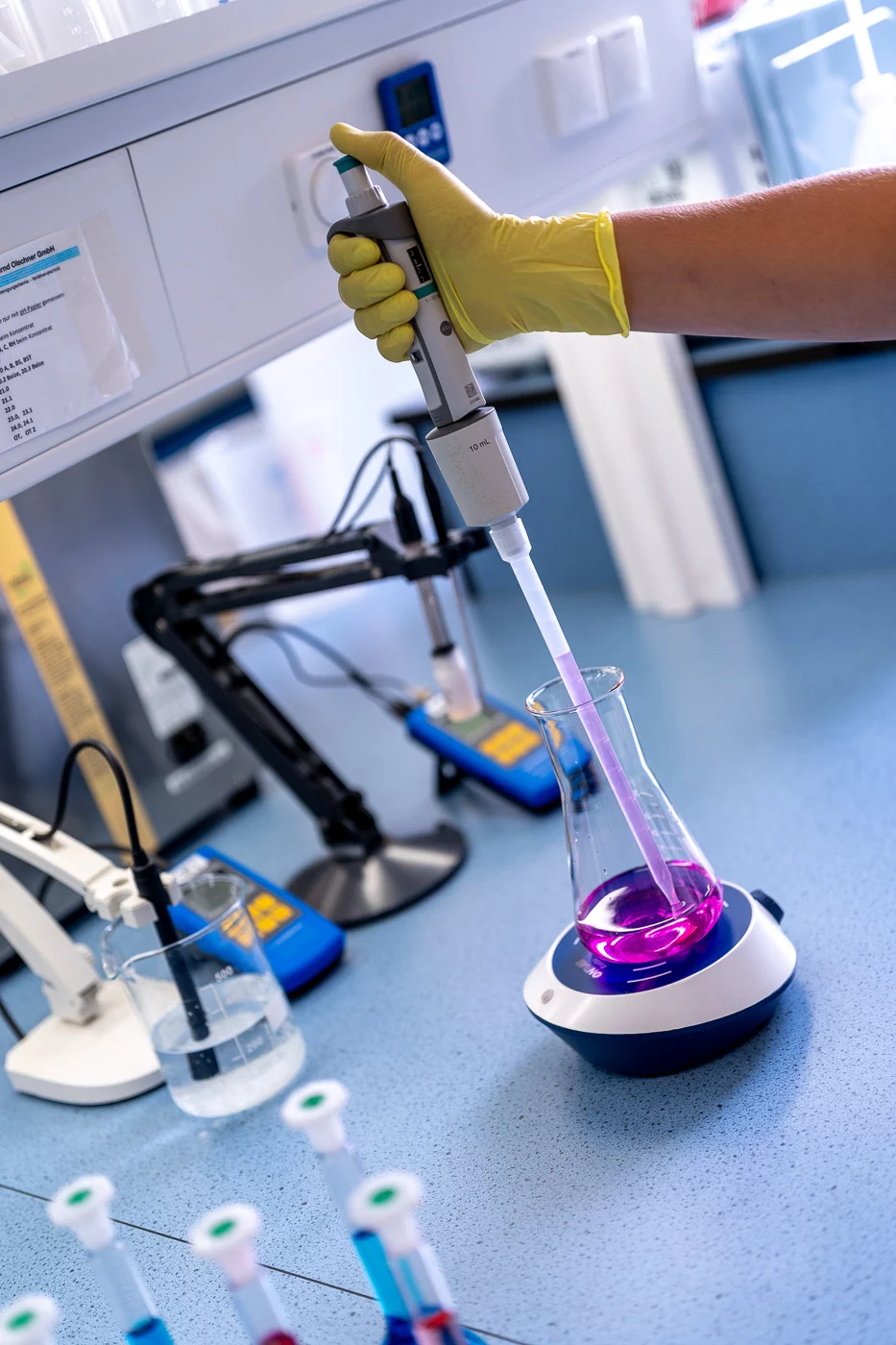
Below, we provide a comprehensive guideline for the adjustment of pH values. Depending on the material and product in use, such adjustments may become necessary within cleaning baths (for example in the cleaning of aluminium alloy 5083 using Olschner Optimal 9.3) or in the context of wastewater treatment and disposal.
Should you have any questions or require further assistance, we will be pleased to advise you.
Cleaning of High Purity Water Systems
High purity water systems should be cleaned at regular intervals to ensure and maintain the required level of cleanliness within the installation. Such cleaning procedures may be carried out as part of a periodic maintenance cycle, in conjunction with scheduled system downtimes or a necessary measure in response to microbiological contamination.
We provide three detailed guidelines, outlining possible approaches to system cleaning
- Cleaning of High-Purity Water Systems (Ultrasonic)
- Cleaning of High-Purity Water Systems SMT (Ultrasonic) – HIO free, EUV compliant
- Cleaning of High-Purity Water Systems SMT (Spray Cleaning) – HIO free, EUV compliant

Passivation According to ASTM
Electrochemical series in the cleaning bath – Passivation according to ASTM Standards + Salt Spray Test + Boiling Test
The passivation of medical and surgical devices, as well as implants is governed and defined by internationally recognized ASTM standards. Bernd Olschner GmbH specializes, among other areas, in passivation products that avoid the use of nitric acid (note: potential formation of mutagenic nitrosamines) and instead utilize citric acid, offering significantly improved user safety and enhanced environmental compatibility.
The ASTM standard precisely specifies the required process parameters, including operating temperatures, exposure times and minimum concentrations. It also defines various methods for verifying the effectiveness of the passivation process.
We have compiled detailed information in the following document
–> Passivation with Citric Acid in Accordance with ASTM 967 and Salt Spray Testing
Our product portfolio includes a range of passivation media tailored to different requirements: solutions for pure passivation, combined cleaning and passivation in a single step, as well as EUV compliant, HIO-free passivation media, suitable for both, spray cleaning and ultrasonic immersion processes.
We will be pleased to assist you in selecting the most appropriate product for your specific application.
Ultrasonic, Spray and CnP (Cyclic Nucleation) Cleaning Technologies
The various cleaning technologies impose distinct requirements on the cleaning agents employed. In order to ensure optimal process performance, our cleaning concentrates have been specifically formulated and adapted to the respective technologies.
For spray cleaning applications as well as for cleaning using CnP (pressure vacuum processes), we have developed cleaning agents that reliably withstand locally high injection pressures while remaining virtually foam free, thereby preventing interference with the system’s sensor technology.
Through targeted modifications, the same cleaning formulations can also be optimized for effective ultrasonic bath applications.
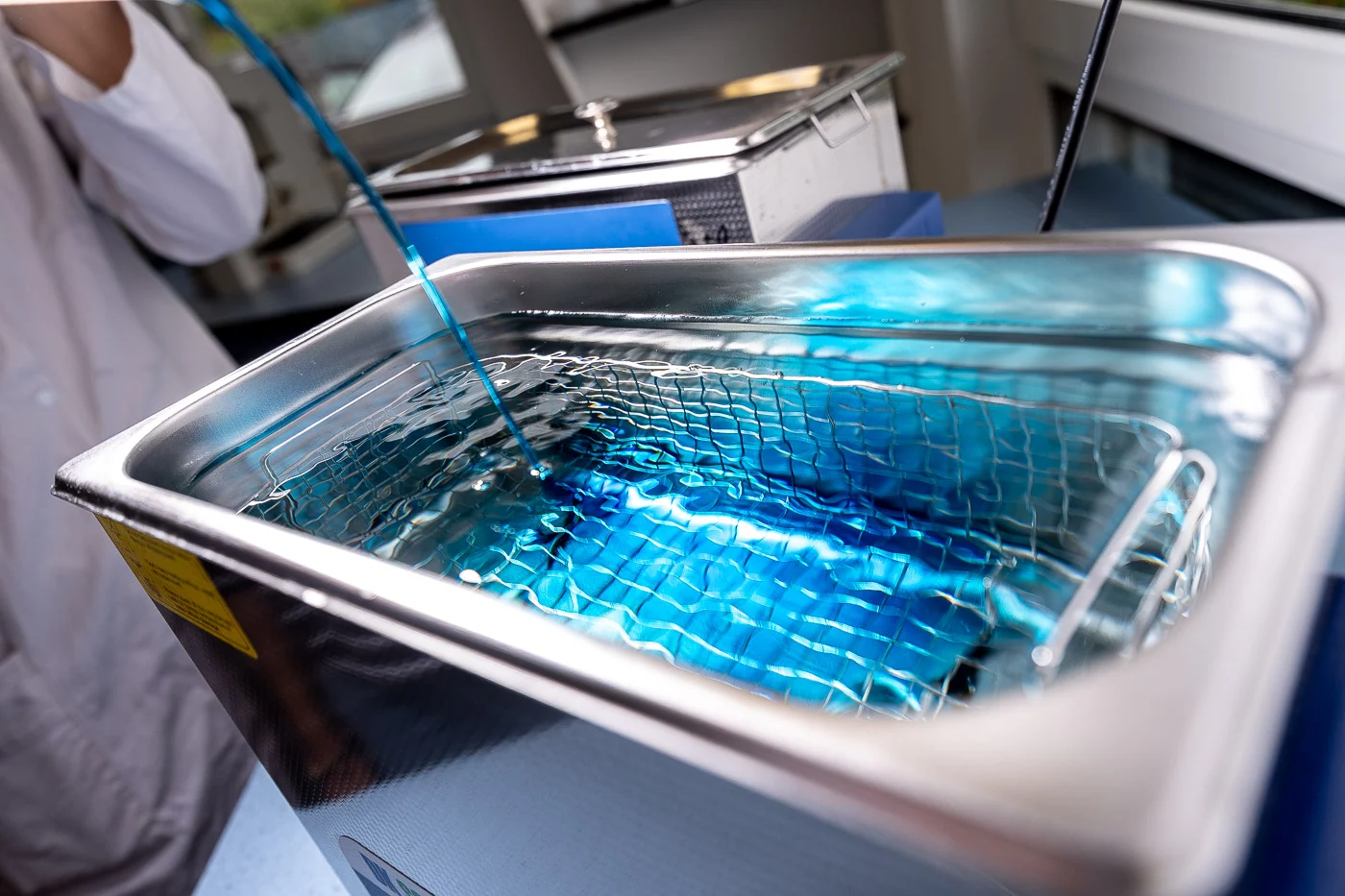
Bath Service Life
A universally valid statement regarding the service life of cleaning baths cannot be made. The operational lifetime of a cleaning bath depends on a wide range of factors and must be evaluated individually for each application. The following parameters should be taken into consideration when assessing bath service life:
- Total volume of the bath / tank
- Cleaning temperature
- Type and diversity of introduced contaminants
- Dimensions and geometry of the components (e.g. complex shapes, blind holes, recesses)
- Bulk goods or individual parts
- The initial level of contamination of parts entering the system (“clean” versus “heavily soiled”)
- Presence of pre-cleaning and/or intermediate cleaning steps
- Process throughput (e.g. one basket per day versus six baskets per hour)
- Carryover from upstream process baths
- Evaluation based on bath monitoring data – concentration (% Brix) and conductivity (µS / mS)
- Visual assesment of the bath – color, odor, visible contamination
- Assesment of component cleanliness after cleaning process
- Manual operation versus automated system processes
Based on our extensive experience, bath service life can vary significantly, from a single day to serveral weeks, depending on the specific conditions and parameters of the process at the respective site.

Deoxidation of Aluminium
Brown Discolorations on Aluminium and Deoxidation Processes
Depending on the pH value of the selected cleaning agent and the specific aluminium alloy, excessively alkaline conditions may lead to brownish discoloration on component surfaces.
Within the Olschner Optimal 9.3 product range (Olschner Optimal 9.3 US SMT, Olschner Optimal 9.3 SMT for CnP and Olschner Optimal 9.3 SP SMT), a ph value exceeding 7.2, particularly in combination with aluminium alloy 5083, can result in the formation of brown stains. An increase in pH may occur due to carryover from upstream process baths, introduced contaminants or a slight inherent rise in pH value of the concentrate (a production related effect that can not be entirely avoided).
In this context, we strongly recommend consistent and careful bath monitoring, as this issue can be easily prevented. Should the pH value of the bath exceed the recommend range, it can be adjusted quickly and efficiently (see guideline for pH adjustment)
If aluminium components have already developed such discoloration, we provide a dedicated guideline outlining an effictive method for their cleaning and restoration.
Bath Monitoring
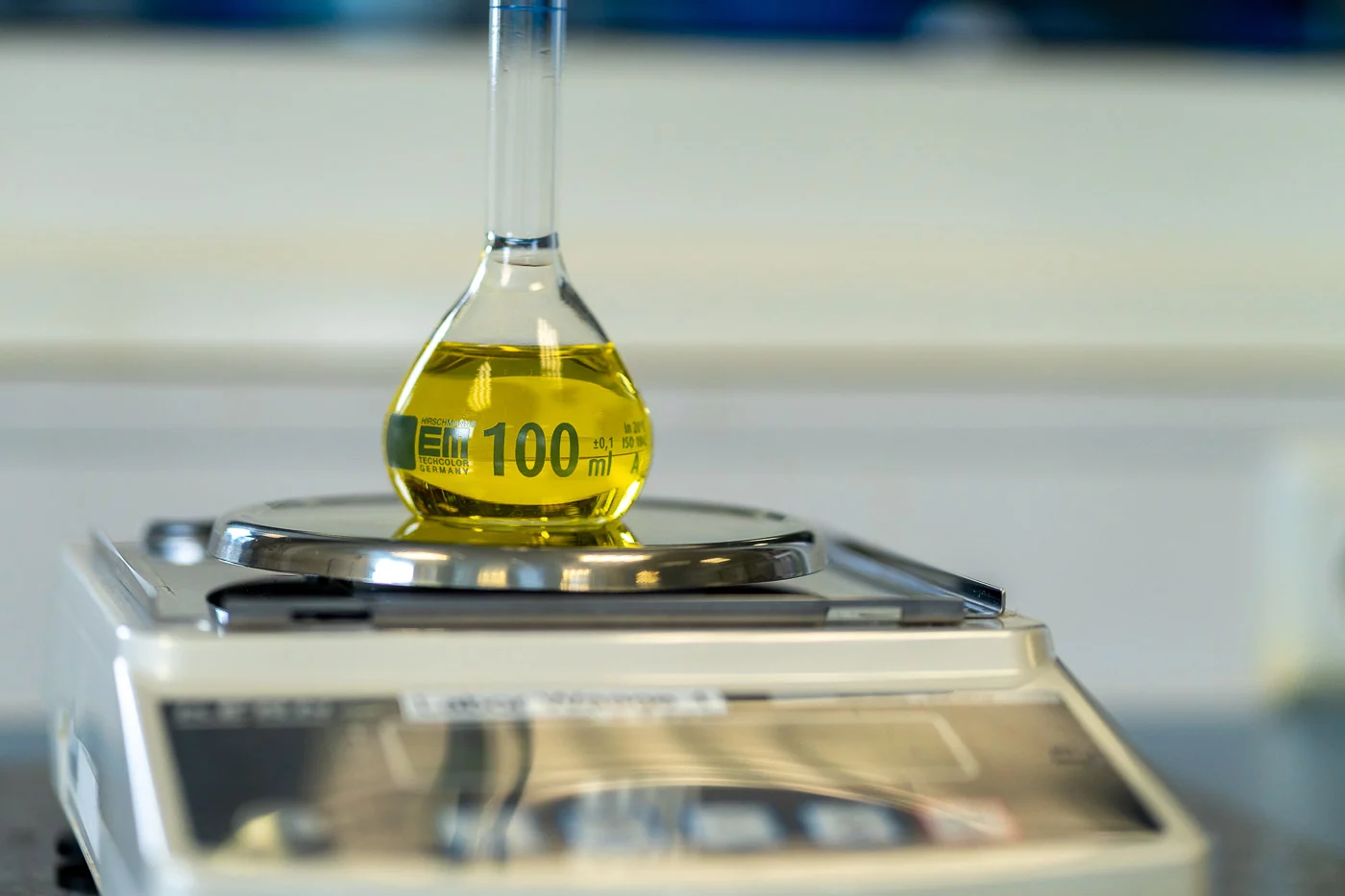
A well-structured monitoring system for your cleaning and rinsing baths forms the foundation for consistently high cleaning performance. Through close meshed, continuous control and systematic documentation of the collected data, valuable insights into your process can be obtained. This enables the early identification of deviations, the avoidance of errors and the recognition of trends that may influence cleaning quality.
In addition, manual bath monitoring enhances process awareness and promotes a greater sense of responsibility for operational stability. The time and material effort required for such monitoring is minimal and no specialized expertise is necessary.
Whether it is a drop in concentration within a cleaning bath, excessive carryover into rinising stages or a malfunctioning deionized water (DI) activated carbon cartridge, these and many other potential issues can be prevented in advance or detected, identified and resolved at an early stage – through systematic bath monitoring.
Certain materials are highly sensitive to prevailing pH conditions, even minor fluctuations may result in discoloration or film formation that is difficult or impossible to remove afterward. In passivation processes according to ASTM standards, specific concentration levels must be maintained to ensure compliance. Simillarly, elevated conductivity levels in rinse baths may lead to spotting or streaking, which can become paricularly problematic after drying due to “baking in” of residues.
Independent, manual bath monitoring provides a reliable complement to automated process controls and contributes significantly to overall process stability and quality assurance.
In our guideline “Measuring Instruments for Bath Monitoring” we have compiled the key information and recommendations we consider essential. Should you have any questions, we will be pleased to assist you.